
If you are planning to upgrade your business checkout, one of the first questions you are likely to ask is: how much does an EPOS system cost? The answer depends on several factors, including the hardware you need, software features, number of tills, payment processing arrangements, installation, and ongoing support.
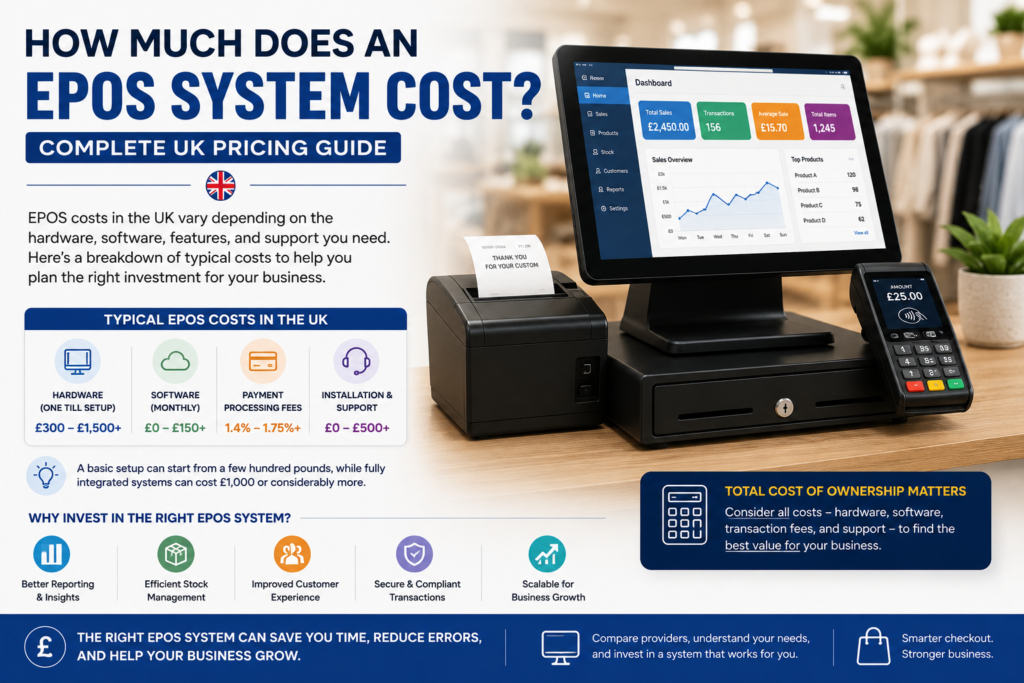
In the UK, a basic setup can cost considerably less than a fully integrated system designed for a busy business with multiple terminals. Current UK market guides indicate that basic hardware can start from a few hundred pounds, while more complete setups can cost £1,000 or considerably more. Monthly software costs can range from free options to well over £100, depending on the features and scale required.
Rather than focusing only on the initial purchase price, businesses should consider the total cost of ownership. A cheaper system may have higher transaction fees or limited features, while a more advanced solution may cost more initially but provide better reporting, stock management, payment integration, and scalability.
What Is an EPOS System?
An EPOS, or Electronic Point of Sale system, is a digital solution that helps businesses manage sales and transactions. Unlike a traditional cash register, modern EPOS technology can combine payment processing, sales reporting, product management, stock monitoring, customer information, and other operational tools in one platform.
The exact features vary between providers. Some systems are designed for straightforward transactions, while others provide advanced inventory management, multi-location control, staff management, loyalty features, reporting, and integration with other business software.
For example, Speedy Payments provides EPOS solutions with features including mobile order taking, loyalty integration, multi-location management, sales tracking, stock monitoring, reporting, and payment integration.
So, How Much Does an EPOS System Cost in the UK?
There is no single price that applies to every business. Your total investment depends on the type of setup you choose.
As a general UK market guide, a basic single-location setup may involve several hundred pounds of hardware and a relatively low monthly software cost. More comprehensive installations with dedicated terminals, printers, scanners, cash drawers, and multiple tills can move into the £1,000–£3,500+ range depending on configuration. Monthly software and support may range from around £20 to £150 or more for advanced requirements.
Some current UK market comparisons place typical hardware for an independent business at approximately £600–£1,500, while more advanced multi-terminal installations can reach £2,000–£5,000 or more.
These figures should be treated as general guidance rather than a fixed quotation because EPOS providers structure their pricing differently.
What Makes Up the Cost of an EPOS System?
Understanding the different costs makes it easier to compare providers and avoid unexpected expenses.
1. EPOS Hardware
Hardware is often the largest upfront expense. Depending on your requirements, you may need:
- Touchscreen till terminal
- Cash drawer
- Receipt printer
- Barcode scanner
- Customer-facing display
- Card payment terminal
- Tablet or handheld device
- Kitchen printer or display equipment where required
A simple setup using an existing tablet and card reader can be relatively inexpensive. A dedicated countertop installation with professional hardware will naturally cost more.
UK market estimates show hardware ranging from roughly £150–£400 for simpler setups to £600–£1,500 for an independent retail configuration, while larger multi-terminal installations can cost several thousand pounds.
2. EPOS Software
Software controls the functions behind the till. Basic plans may provide transaction processing and simple reporting, whereas advanced packages can include inventory management, staff accounts, detailed analytics, loyalty programmes, multi-site management, and integrations.
Some providers offer free software with transaction charges, while paid packages can cost anywhere from approximately £20 to £200 or more per month depending on the provider and features.
When comparing software, look beyond the monthly subscription. Check exactly which features are included and whether additional users, locations, integrations, or terminals incur extra charges.
3. Payment Processing Fees
Payment processing is another important part of your overall cost.
Some providers charge a percentage for every card transaction. Others may offer different rates depending on transaction volume, contract terms, payment method, or business requirements.
For example, recent UK market comparisons show card processing rates commonly falling within approximately 1.4%–1.75% for certain mainstream solutions, although actual rates vary by provider and agreement.
This is why a system with a low monthly subscription is not necessarily the cheapest option overall. If your business processes a high volume of card payments, even a small difference in transaction rates can significantly affect annual costs.
4. Installation and Setup
Some businesses can install their system themselves, while others prefer professional setup.
Installation may include:
- Hardware configuration
- Software setup
- Product import
- Payment integration
- Network configuration
- Staff accounts
- System testing
- Employee training
Depending on the provider, setup may be included, charged separately, or incorporated into a package.
Speedy Payments highlights setup assistance and staff training as part of its approach to helping businesses get started with their EPOS solution.
5. Ongoing Support
Technical support is easy to overlook when comparing prices.
If your till stops working during a busy period, getting quick assistance can be more valuable than saving a small amount on your monthly subscription. Before choosing a provider, check what support is available, when it is available, and whether support is included in your plan.
You should also check whether software updates, troubleshooting, training, and hardware assistance are included or charged separately.
How Much Does an EPOS System Cost for a Small Business?
A small business with one till and straightforward requirements can usually keep its initial investment relatively low.
A basic setup might consist of a tablet or touchscreen, card reader, receipt printer, and software. Current UK market guides put simple small-business configurations at approximately £150–£400 for hardware, with software potentially costing £0–£30 per month depending on the solution.
Businesses that require dedicated equipment, inventory management, staff controls, and more advanced reporting should expect to spend more.
The important point is to choose based on your actual requirements rather than simply selecting the cheapest available package.
How Much Does an EPOS System Cost for a Restaurant?
Businesses handling table orders, menus, multiple payment points, or kitchen operations may require additional hardware and software.
A typical restaurant configuration can include touchscreen terminals, receipt printers, card machines, kitchen printers or displays, handheld devices, and specialist software. Recent UK estimates place smaller restaurant or café hardware configurations at roughly £800–£2,000, with monthly software costs often around £40–£100 depending on requirements.
For a business with several terminals and more advanced operational requirements, the investment can be significantly higher.
A dedicated epos system for restaurant operations can also provide tools for menu management, order handling, payments, reporting, and other workflows, depending on the provider and software package.
How Much Does an EPOS System Cost for a Retail Business?
Retail businesses often need strong product and inventory management alongside fast transaction processing.
A typical retail setup may require:
- Touchscreen till
- Barcode scanner
- Receipt printer
- Cash drawer
- Card terminal
- Product database
- Inventory management
- Sales reporting
For an independent retail business, current UK industry estimates put typical hardware around £600–£1,500, with software commonly costing approximately £30–£80 per month.
Larger businesses with multiple tills, extensive product catalogues, customer loyalty tools, and multi-location management can require substantially more investment.
An epos system for retail shop can therefore vary considerably in price depending on the size of the operation and the number of features required.
Are Cheap EPOS Systems Worth It?
A low-cost system can be a good choice if your business has straightforward requirements. However, price should not be the only deciding factor.
Before selecting an inexpensive solution, check:
- Transaction fees
- Monthly subscription
- Hardware quality
- Number of users included
- Number of locations supported
- Inventory features
- Reporting capabilities
- Integration options
- Customer support
- Contract length
- Upgrade costs
A system that appears inexpensive at first could become more expensive if essential features require additional subscriptions.
How to Reduce EPOS Costs
There are several practical ways to control your overall investment.
Choose Only the Hardware You Need
Do not purchase equipment that your business will not use. A small operation may not require multiple terminals, customer displays, or advanced peripherals.
Compare Total Costs
Look at the first-year and long-term costs rather than the advertised starting price. Include hardware, software, payment processing, installation, support, and upgrades.
Check Contract Terms
Understand whether you are entering a monthly, annual, or longer agreement. Check cancellation conditions and additional charges before signing.
Consider Scalability
Choosing a system that can grow with your business can prevent the expense and disruption of replacing your entire setup later.
Ask for a Clear Quote
A provider should be able to explain what you are paying for. Ask for a breakdown of hardware, software, payment processing, setup, support, and any optional features.
Is an EPOS System a Good Investment?
For many businesses, an EPOS system is more than a way to process payments. It can bring sales information, stock management, reporting, and payment operations together.
Speedy Payments states that its EPOS solutions are designed to help businesses manage transactions, sales, stock, payments, reporting, and multiple locations from a connected system.
The value therefore depends on how effectively the system solves your operational challenges.
If it reduces manual administration, improves transaction accuracy, provides better sales visibility, speeds up checkout, and helps you manage stock more efficiently, the ongoing cost may be justified by the operational benefits.
Final Thoughts
So, how much does an EPOS system cost? There is no universal price because every business has different requirements.
A basic setup can start with relatively affordable hardware and low-cost software, while a complete professional installation can require several thousand pounds. Monthly costs can range from free plans to £100 or more, while transaction fees can become a significant expense for businesses processing large volumes of card payments.
The best approach is to calculate the complete cost rather than focusing on the cheapest headline price. Consider hardware, software, transaction charges, installation, support, scalability, and the features your business actually needs.
For businesses looking for a flexible payment and EPOS solution, Speedy Payments provides till systems designed around different business requirements, with features such as sales management, stock monitoring, reporting, payment integration, and multi-location control.
Common Questions About EPOS System Costs
1. What is the average cost of an EPOS system in the UK?
The cost varies widely. Basic setups may cost a few hundred pounds, while professional systems can cost £1,000–£3,500 or more. Monthly software can range from free plans to £150+ depending on requirements.
2. Does an EPOS system have a monthly fee?
Some systems offer free software, while others charge a monthly subscription. Paid plans generally provide additional features, users, integrations, reporting, or advanced management tools.
3. Is hardware included with an EPOS system?
It depends on the provider. Some providers sell hardware separately, while others offer complete packages containing equipment and software.
4. Do EPOS systems charge transaction fees?
Many EPOS and payment providers charge a fee for processing card transactions. The rate depends on the provider, payment method, contract, and transaction volume.
5. Can I use an EPOS system with an existing tablet?
Some EPOS platforms support compatible tablets, which can reduce the initial hardware investment. Always check compatibility before purchasing.
6. How much does an EPOS system cost for a small business?
A simple small-business setup can start from a few hundred pounds for hardware, with software potentially available from £0 to around £30 per month depending on the provider and features.
7. Is installation included in the EPOS price?
Not always. Some providers include setup, while others charge separately. Ask for a complete quote that clearly identifies installation and training costs.
8. Can an EPOS system support multiple locations?
Yes. Many modern systems offer multi-location management, allowing businesses to monitor sales, stock, and other information across different sites.
9. What should I consider before buying an EPOS system?
Consider hardware, software features, payment processing rates, support, integrations, scalability, contract terms, security, and the total cost over at least the first year.
10. How can I get an EPOS system quote?
The best way is to contact an EPOS provider and explain your business size, number of tills, required features, payment volume, and hardware requirements. A tailored quotation can then give you a more accurate picture of the total investment.